White House pressures Oman to break ties with Iran over Strait of Hormuz tolls
06/08/2026 / By Ava Grace
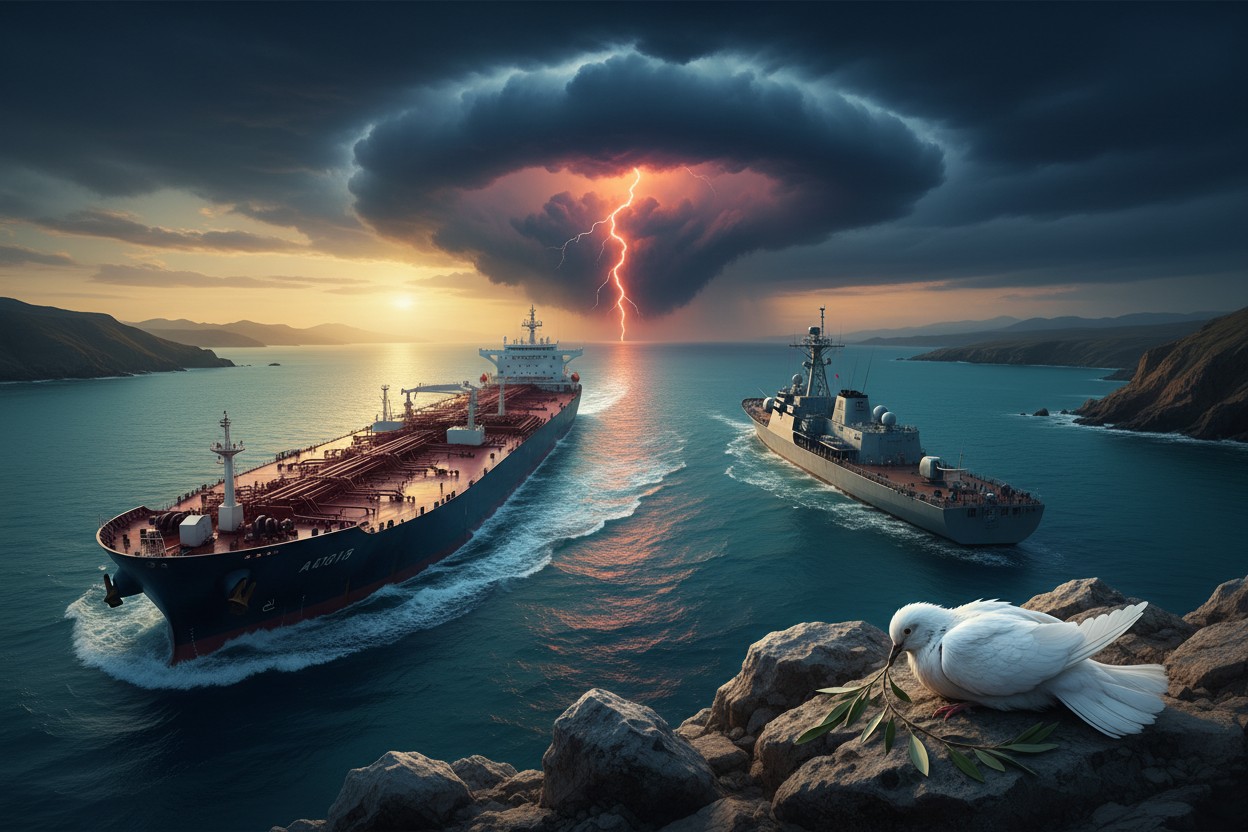
- The White House is escalating pressure on Oman to sever diplomatic relations with Iran, based on intelligence that Oman may have colluded with Tehran to impose fees on vessels transiting the Strait of Hormuz. President Trump has threatened military force and economic sanctions if Oman does not comply.
- The Strait of Hormuz is a critical global energy artery, handling roughly 20 million barrels of oil daily. Its narrow width (13 miles at its narrowest) makes it vulnerable to disruption, which could choke off oil and gas supplies to major economies.
- The Musandam Peninsula, an Omani exclave gives Muscat extraordinary leverage because the primary deep-water shipping lanes fall entirely within Omani territorial waters, giving it technical authority over traffic separation schemes.
- If Oman acquiesces to Iran’s tolling scheme, shipping costs would spike, raising gasoline, heating and food prices globally. Europe, already facing an energy crisis, would be particularly vulnerable, potentially pushing energy prices to 1970s-level oil shocks.
- Neighboring states like Saudi Arabia and the UAE criticize Oman’s refusal to condemn Iranian actions, fearing a tolling precedent. The U.S. demand risks pushing Oman closer to Tehran, consolidating Iranian control over the waterway and highlighting the limits of U.S. military power in the region.
The White House is escalating pressure on Oman to sever diplomatic relations with Iran, driven by intelligence assessments that the sultanate may have colluded with Tehran to impose fees on vessels traversing the Strait of Hormuz. This push, reported by the Wall Street Journal on June 2, has prompted President Donald Trump to threaten military force and economic sanctions against a nation historically seen as a neutral mediator in Middle East conflicts. The demand signals a stark shift in U.S. regional strategy, placing Oman directly in the crosshairs of Washington’s maximum pressure campaign against Iran.
The Strait of Hormuz: A strategic chokepoint
The Strait of Hormuz, a narrow waterway connecting the Persian Gulf to the Gulf of Oman, is one of the world’s most critical energy arteries. At its narrowest, the strait measures just 13 miles wide, with two shipping lanes each only about two miles across, separated by a two-mile buffer zone. This cramped geography means any disruption could instantly choke off oil and natural gas supplies to major economies. The strait handles roughly 20 million barrels of crude oil daily, making it the lifeblood of global energy markets.
According to U.S. intelligence, Oman may have considered a joint arrangement with Iran to impose fees on vessels navigating the strait. The establishment of the Persian Gulf Strait Authority (PGSA) has given Tehran new administrative leverage over the waterway. Although Omani officials have denied any intent to implement such fees, the intelligence reports have fueled frustration in Washington, where officials view Oman’s neutral stance as increasingly hostile.
Trump’s Ultimatum: Sanctions and military threats
President Trump issued a stark warning that Muscat must align with international norms or face severe repercussions. Trump declared that the United States would be forced to take military action if Oman did not comply. U.S. Treasury Secretary Scott Bessent backed this posture, threatening sanctions if Oman proceeds with any tolling plan. The administration’s response reflects a strategy of using economic coercion to force allies to choose sides.
Oman’s diplomatic denials and defiance
Omani Information Minister Abdulla al-Harrasi has sought to defuse tensions, emphasizing the sultanate remains ready to work with the United States to promote stability. Officials in Muscat provided assurances through their ambassador that no tolling scheme is being pursued. However, Bessent noted that the lack of written commitments and Oman’s refusal to condemn Iranian actions have eroded trust. Washington has now moved to sideline Oman in diplomatic discussions.
Following the U.S. threats, Iran declared total solidarity with the Sultanate. In late May, the U.S. Treasury Department blacklisted the Persian Gulf Strait Authority under its maximum pressure campaign. This designation freezes the agency’s assets, but the move may prove symbolic, as the authority’s leverage lies in its physical control over the waterway.
Geography as power: Oman’s unique leverage
The Musandam Peninsula, an Omani exclave jutting into the Strait of Hormuz, gives Muscat extraordinary geographic leverage. The primary deep-water shipping lanes fall entirely within Omani territorial waters, giving the sultanate technical authority to oversee traffic separation schemes. Analysts note this positioning makes Oman the physical guardian of the gateway, placing it directly in the aim of U.S. ambitions.
Oman has historically served as a neutral mediator, facilitating the 2015 nuclear pact between Iran and world powers. The U.S. pressure to sever diplomatic relations marks a fundamental challenge to this identity. Washington’s demand that Oman choose sides risks alienating a trusted interlocutor and could destabilize the Gulf’s delicate balance of power.
Regional reactions: Saudi and UAE concerns
Neighboring states, particularly Saudi Arabia and the UAE, have criticized Oman’s refusal to condemn Iranian actions. These countries depend on the Strait for their own oil exports and fear any tolling arrangement could set a precedent for Tehran to extract payments from all shipping. The UAE, with its massive oil terminals, stands to lose billions.
If Oman acquiesces to Iran’s tolling scheme, economic consequences would be immediate. Shipping costs would spike, raising gasoline prices, heating bills and food costs. Europe, already reeling from an energy crisis exacerbated by sanctions on Russian gas, would be particularly vulnerable. A toll on the strait could push energy prices to levels not seen since the 1970s oil shocks.
Implications for U.S. strategy
By pushing Oman to break ties, Washington risks pushing Muscat closer to Tehran, a scenario that would consolidate Iranian control over the waterway.
“The U.S. is pressuring Oman because diplomatic talks in Oman have repeatedly failed to resolve the standoff with Iran, with five rounds of negotiations yielding no progress,” said BrightU.AI’s Enoch. “The Trump administration is using tough leverage, including evacuation orders and brinkmanship tactics, to force a halt to Iran’s enrichment activities. This pressure on Oman likely aims to push the mediating nation to influence Tehran’s stance, as Washington insists on concessions before any sanctions relief.”
The standoff over Oman’s diplomatic relations with Iran represents a dangerous inflection point. As the world’s most vital energy transit point hangs in the balance, the outcome will determine not only the stability of global oil markets but also the future of U.S. influence in a region where the narrowest passages can cause the widest crises.
Watch this report about America’s last attempt to break Iran.
This video is from Cynthia’s Pursuit of Truth channel on Brighteon.com.
Sources include:
Submit a correction >>
Tagged Under:
big government, chaos, Collapse, Donald Trump, freedom, intolerance, Iran, Liberty, military action, national security, Oman, self-defense, Strait of Hormuz, supply chain warning, terrorism, toll, transport fee, transportation, US-Israel strikes, violence, war on Iran, White House, WWIII
This article may contain statements that reflect the opinion of the author
RECENT NEWS & ARTICLES