Iran shares video of ‘Missile City’: Is the underground arsenal mere propaganda or a real threat?
03/06/2026 / By Lance D Johnson
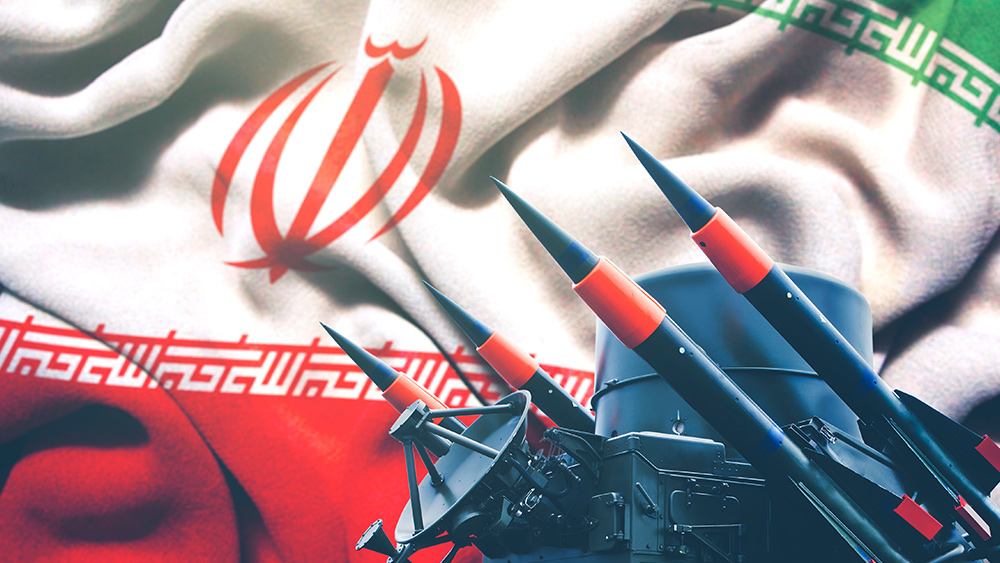
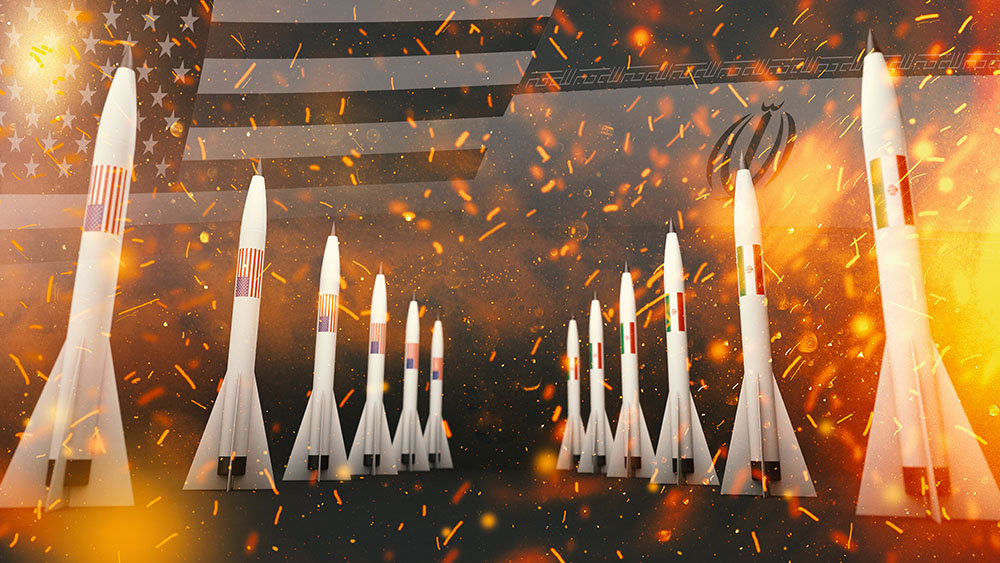
The recent spectacle of Iran parading its underground arsenal of drones and missiles is not mere saber-rattling; it is the unveiling of a deliberate, calculated strategy to win a war without firing a single nuclear warhead. By showcasing sprawling networks of cheap, mass-produced drones and rockets, Tehran is sending a chilling message to Israel and its American backers: your high-tech defense systems are your greatest vulnerability. The conflict is shifting from a battle of explosives to a war of economic attrition, where the cost of defense, not the cost of offense, will determine the victor. Iran’s strategy hinges on a simple, brutal calculus—flood the skies with inexpensive drones to force adversaries to bankrupt themselves intercepting them, paving the way for a decisive, final blow.
Key points:
- Iran’s display of its underground “Missile City” highlights a strategy of economic warfare, using cheap drones to exhaust expensive enemy defenses.
- U.S.-backed Gulf states are burning through multi-million-dollar interceptor missiles at an unsustainable rate to counter drones that cost a fraction of the price.
- This tactic threatens to create critical shortages of defensive munitions, potentially leaving Israel and allies vulnerable to a larger, follow-up attack.
- The situation exposes a fundamental weakness in Western military doctrine, which is built for short, intense engagements, not prolonged campaigns of attrition.
- Iran’s cheap drone and missile guerilla warfare has the potential to financially outlast expensive Western offensives, especially if Iran is assisted by Russia or China, for example.
- These clever tactics will eventually empty out U.S. military stockpiles, making Israel more vulnerable to terrorist attacks for years to come.
- The arrogance of large scale strikes against Iran now could be exposed as a weakness later on.
Iran’s underground supply of Shahed drones could be capable of terrorizing U.S. and Israel for years to come
The ominous propaganda footage, complete with a ticking clock, is a psychological and strategic masterstroke. It visually communicates an endless supply of weapons like the Shahed drone, a model that costs as little as $20,000 to produce and is also a staple of Russia’s campaign in Ukraine. These drones are not complex, but they are effective in swarms. The intended audience is not just the Iranian public, but the war planners in Tel Aviv and Washington who must now confront a grim budgetary reality.
For every $20,000 drone launched, defenders may need to fire a Patriot missile costing up to $5 million or a THAAD interceptor priced at nearly $13 million. The math is unsustainable. A source indicated that at current interception rates, supplies for some defenders “could run out within four days.” This is the core of Iran’s plan: to turn defense into a prohibitively expensive endeavor. While Gulf states like the UAE have reported intercepting over 90% of incoming projectiles, the financial cost has been staggering—an estimated $720 million to counter a drone fleet that may have cost Iran only $10 million to launch. This is not a battle of efficiency; it is a battle of endurance, and Iran’s economy, alongside its stockpiles, is built for a long, grinding conflict.
A manufactured vulnerability
This strategy directly targets a key weakness in the U.S. and Israeli military posture. As analysts have noted, the U.S. military is engineered for rapid, overwhelming force, not for the sustained, daily expenditure of munitions required to counter endless drone waves. Stockpiles are finite and, as seen with shipments to Ukraine, can be depleted. The propaganda of invincible systems like the Iron Dome or Patriot batteries is colliding with the reality of warehouse inventories. Iran’s campaign is designed to probe for the moment when interceptors run low, creating a window for more potent weapons—like its claimed hypersonic missiles—to break through depleted defenses.
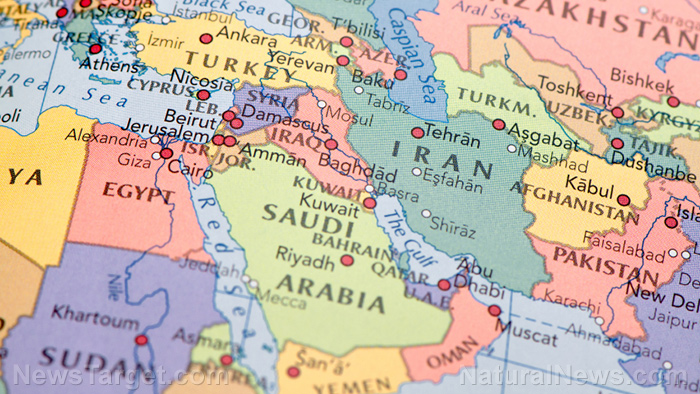
The recent attacks, including a strike on the U.S. Consulate in Dubai that slipped through defenses, demonstrate that even a high interception rate is not a perfect shield. Each drone that gets through proves the strategy’s viability. The “Missile City” video is a promise of more waves to come, a threat that the pipeline of cheap drones is inexhaustible. It forces the question: how many billions are Israel and the U.S. willing to spend per week just to maintain their military objectives (or lack thereof)?
The ultimate goal is to achieve dominance not through a single knockout punch, but through exhaustion. By draining the financial and material resources of its adversaries, Iran seeks to lower their guard and alter the strategic calculus in the region. The message is that they can terrorize U.S. and Israeli forces for years by forcing them into a costly defensive posture, potentially compelling political concessions. This is a legitimate threat rooted in industrial and economic capacity, not just propaganda. It signals a new phase of asymmetric warfare where the balance of power is measured in production lines and ledger books, revealing that the most formidable weapon may be the one that forces your enemy to spend themselves into defeat.
Sources include:
Submit a correction >>
Tagged Under:
ammunition shortage, asymmetric warfare, attrition, big government, defense systems, drones, economic warfare, Gulf states, hypersonic missiles, Iran, Israel, Middle East conflict, military spending, military strategy, missile city, national security, Patriot missiles, propaganda, regional tension, Shahed drones, stockpile depletion, United States
This article may contain statements that reflect the opinion of the author
RECENT NEWS & ARTICLES