
New report ties energy abundance directly to longer lives, higher incomes
08/18/2026 / By Cassie B.
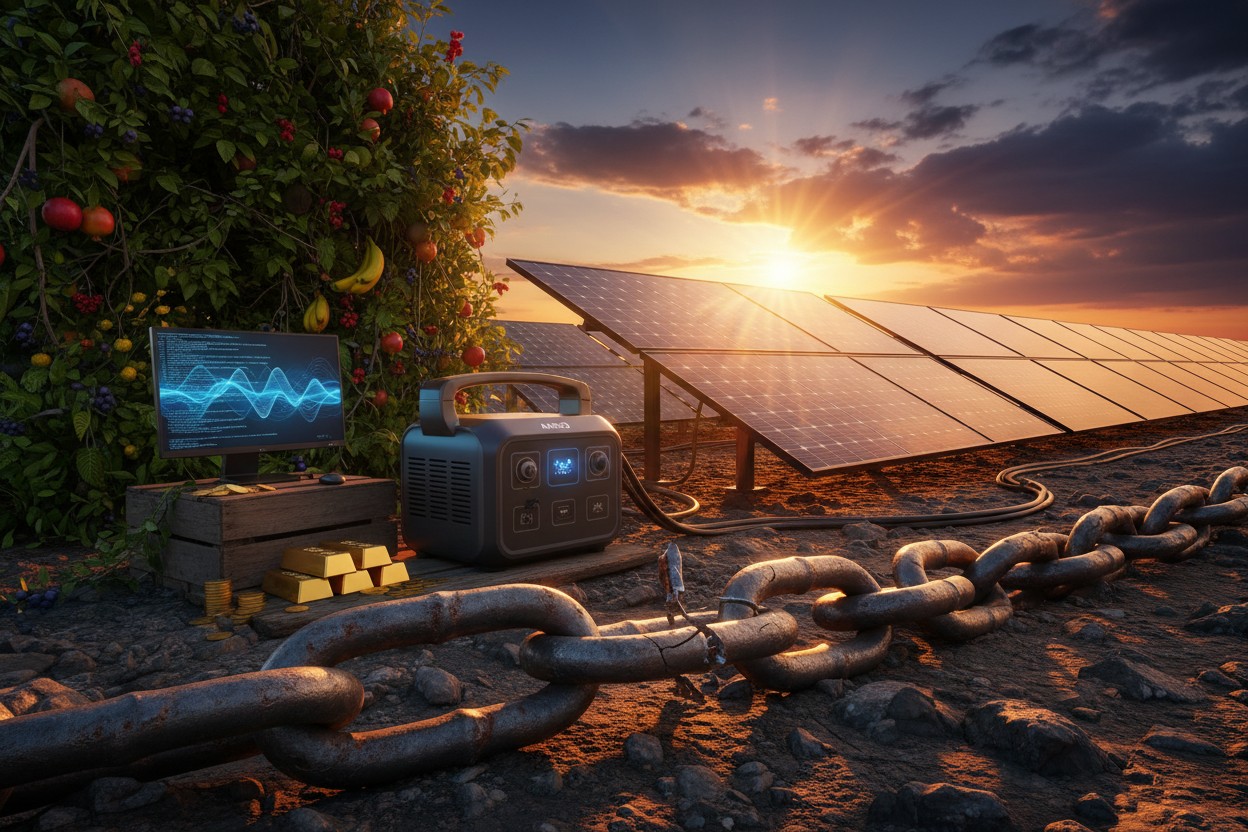
- Energy and prosperity are inseparable, as no nation has achieved lasting wealth without abundant power.
- Poorer nations face stark income and lifespan gaps tied directly to low electricity consumption.
- Industrial output and farm yields rise sharply with greater per capita energy use across all nations.
- Developing economies remain tightly linked to energy-heavy growth, unlike some advanced decoupling trends.
- U.S. data center demand pressures Congress to speed up permitting and expand all energy sources.
A sweeping statistical review by researchers Kevin Dayaratna and Kat Miller concludes that no nation has ever achieved lasting prosperity without first securing abundant energy supplies, challenging policymakers who prioritize emissions cuts over power expansion.
The study, published by Advancing American Freedom, examined decades of cross-country data on income, health, agriculture, and industrial output, finding that energy consumption and human flourishing rise together without exception. The analysis arrives as U.S. electricity demand is projected to climb 2 percent annually through 2030, driven heavily by artificial intelligence data centers, advanced manufacturing, and vehicle electrification.
Poorer nations lag badly on income and lifespan
The report draws dramatic contrasts between countries at opposite ends of the energy spectrum. Nations that get by on just a few hundred to a few thousand kilowatt-hours of electricity per person tend to have annual incomes of only $1,000 to $3,000. Countries burning through tens of thousands of kilowatt-hours per capita, such as the United States and Norway, see far higher earnings.
Public health outcomes follow a similar pattern. Worldwide life expectancy has more than doubled, from about 32 years in 1900 to over 73 years today; in the U.S. it climbed from roughly 49 to nearly 80 over the same span. Yet the divide between rich and poor nations remains pronounced: Somalia and Chad still report life expectancies under 60 years, while Norway, Japan, and Switzerland top 80. Child mortality shows the same divide — countries with the least energy access lose more than one in ten children, roughly ten times the rate seen in energy-rich nations.
The authors argue these links extend beyond correlation to direct causation. As the report puts it, “You can’t refrigerate a vaccine, run a hospital, or pump clean water without reliable energy.”
Industry and farming track power use closely
Industrial productivity shows an even tighter bond with energy consumption. The population-weighted correlation between per capita energy use and industrial value added yields an R² of 0.84 — a statistical measure indicating a very strong relationship. Countries consuming hundreds of gigajoules per person produce tens of thousands of dollars in industrial output, while those using only tens of gigajoules generate just a few thousand.
Farming tells a similar story. U.S. corn growers averaged nearly 11 metric tons per hectare in 2024, roughly double the global average of under 6 tons — a gap the report ties to synthetic fertilizer, irrigation, and mechanized equipment that all run on hydrocarbons. Take away gas-based fertilizer and diesel fuel, the authors argue, and that yield advantage disappears.
Some advanced economies have shown an apparent “decoupling” of economic growth from energy use. U.S. real GDP grew roughly 9.5-fold between 1950 and 2024 while primary energy use rose only 2.8-fold. But the authors attribute this largely to efficiency gains and a shift from manufacturing toward services and not a diminished need for energy itself.
Developing nations still need energy-heavy growth
The report emphasizes that developing economies remain tightly coupled to energy consumption. Since 1960, developing countries have seen real GDP grow 17.6-fold alongside an 8.0-fold increase in energy use — far more closely linked than the 4.9-fold GDP growth against 2.5-fold energy growth in industrialized nations.
As one commentary on the findings put it, a family in Lagos or Lahore isn’t going to reach Ohio-level living standards on rooftop solar and battery banks; rationing electricity doesn’t build an industrial base, a modern hospital system, or mechanized agriculture. That takes whatever mix of coal, gas, oil, hydro, and nuclear power can be deployed fastest and most cheaply.
Data centers add urgency to U.S. power needs
The report arrives as American electricity demand prepares for its first sustained growth in decades. Projections show 2 percent annual increases through 2030, with roughly half coming from data center expansion alone. The authors warn that the current permitting regime is structurally unprepared to deliver the energy infrastructure this buildout requires.
They recommend Congress establish a bipartisan permitting reform commission modeled on the National Commission on Fiscal Responsibility and Reform, arguing that lengthy approval processes across multiple federal agencies routinely delay major energy projects by years. They also call for an “all-of-the-above” energy approach that lets sources compete on economic merits rather than preferential tax treatment.
The report’s bottom line: energy availability matters at every stage of development. Developing economies need it to industrialize, and advanced ones need it to keep pace with AI, manufacturing, and electrification. Energy and prosperity are mutually reinforcing rather than a simple cause-and-effect: energy access drives production and income, and that income funds further energy use, creating a self-sustaining cycle.
Sources for this article include:
Submit a correction >>
Tagged Under:
big government, Bubble, data center, economic riot, electricity, Energy Abundance, energy consumption, energy supply, money supply, national security, new energy, pensions, power, power grid, progress, prosperity, real investigations, risk, supply chain, truth
This article may contain statements that reflect the opinion of the author