Morocco Thwarts Attempt by Hundreds of Migrants to Enter Spanish Ceuta, Reports Say
08/17/2026 / By Sterling Ashworth
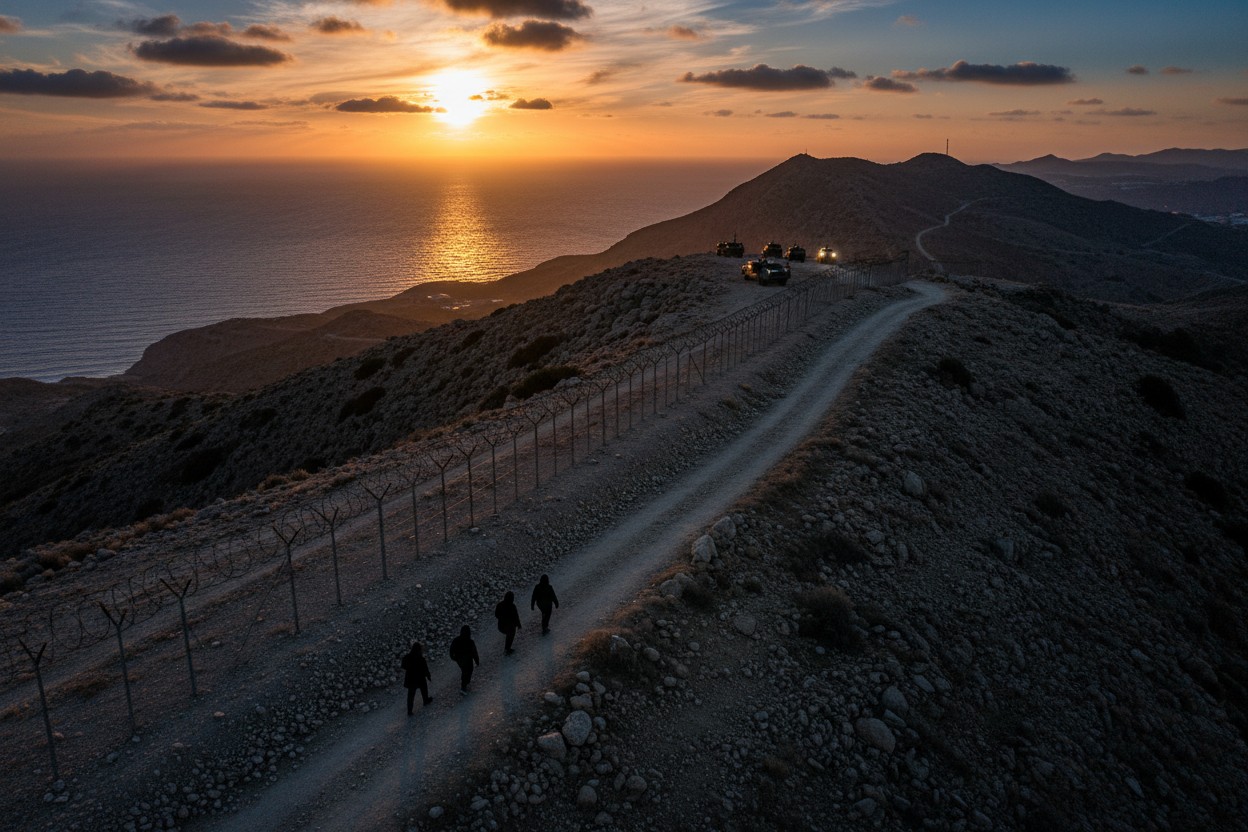
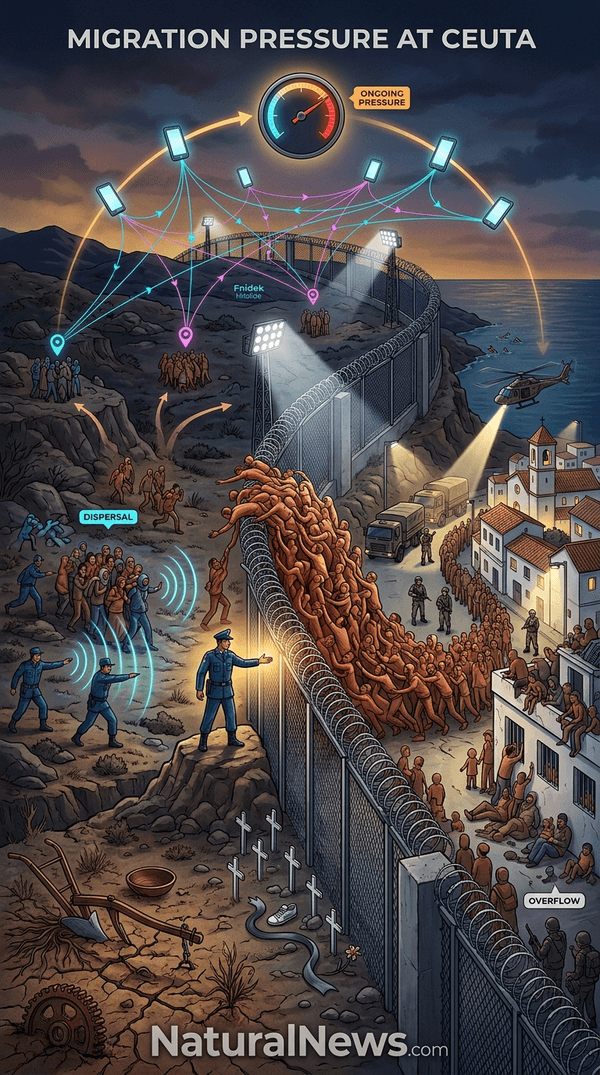
Moroccan security forces prevented hundreds of migrants from illegally entering the Spanish autonomous city of Ceuta, Spanish media reported Saturday, citing sources in Moroccan security agencies [1]. The operation occurred near the Moroccan border town of Fnidek, according to the reports, with forces dispersing the migrants in a mountainous area southwest of Ceuta [1].
The reported operation follows a mass influx of migrants into Ceuta in late July, an event that Spanish Interior Minister Fernando Grande-Marlaska said brought approximately 72,000 people into the Spanish territory [2]. Authorities in Ceuta said Tuesday that approximately 10,000 migrants remain in the city, according to statements reported by Spanish media [1].
Reported Details of the Operation
The migrants were reportedly hiding on the outskirts of Fnidek before being dispersed, according to sources quoted by Spanish media. The reports said Moroccan forces disbanded the group in the mountainous area southwest of Ceuta [1]. No injuries or arrests were reported in the initial accounts.
Moroccan authorities have not issued an official statement about the operation as of this report, and Spanish officials had not commented publicly. The reports did not specify how many migrants were involved in the attempt or provide additional details about the timing of the operation.
In the days following the late July surge, Madrid deployed an expanded military and police presence to the enclave, according to BBC reporting [3].
Context: Late July Influx of Migrants
Ceuta experienced what Agence France-Presse described as one of the largest migrant crises for the European Union in recent years [4]. Middle East Eye reported that 72,000 people entered the territory irregularly, including thousands of Moroccans whom the outlet described as fleeing economic despair [5].
Grande-Marlaska said an estimated 70,000 of the arrivals have since been returned to Morocco [2]. Initial reports said at least 18 migrants died trying to reach the territory, and Rachid Sbihi, who leads a local workers association, called the situation a “serious humanitarian crisis” [6]. Death toll figures have varied among official accounts; Grande-Marlaska said at least 75 people died on the Spanish side of the border and 11 deaths were reported in Morocco [2]. Vivas told the European Parliament of his “profound sorrow” over what he called the “irreparable tragedy” of 100 deaths [7].
Ceuta, a Spanish enclave on the northern edge of Morocco, houses a temporary migrant reception center established to stop and vet the influx of undocumented migrants into Europe [8]. In July and August 2018, more than 600 young males climbed and jumped over the tall wired fence separating the enclave from the Moroccan side, according to accounts of that period [8].
Current Situation in Ceuta
Authorities in Ceuta said Tuesday that approximately 10,000 migrants remain in the city, according to Spanish media [1]. Other officials have provided lower estimates; Vivas said last week that between 3,000 and 5,000 migrants remained in the territory [7]. The city’s migrant reception center, built to accommodate 512 people, has been filled far past capacity, according to reports [9]. More than 800 minors remained in Ceuta four days after the surge, according to the Associated Press [10].
Spanish officials have said they are prepared for potential further crossing attempts, though no details of additional measures were provided in the reports. New calls for mass crossings continue to circulate on social media, according to Vivas [7]. A BBC investigation found a network of Instagram profiles that glamorize the swim around the border fence and offer paid guidance on how to cross, with one account claiming to have helped “many people” [11].
Broader Migration Context and Next Steps
The border between Morocco and the Spanish autonomous cities of Ceuta and Melilla has been a recurring site of migration attempts and security incidents. In 2016, authorities uncovered an arms cache in Ceuta, according to reporting at the time [12]. Spain has also experienced significant surges in migrant arrivals in the Canary Islands, according to prior reporting [13]. Some analysts have accused Moroccan authorities of allowing the late July crossings, while others have pointed to the role of the United States and Israel in the episode [14].
The surge prompted a wider European response. Italy temporarily suspended the border-free Schengen arrangement with Spain, and Madrid condemned what it described as the selfish, polarizing and unlawful reaction of some EU member states [15]. EU Migration Commissioner Magnus Brunner told a European Parliament committee that the bloc should use all available leverage, including visa and trade policy, to ensure Moroccan cooperation, and that “to have control, we must cooperate with our neighbors” [16]. Spain’s Defense Minister Margarita Robles said Madrid will not discuss the sovereignty of Ceuta and Melilla with Morocco, after Rabat publicly renewed its claim to the enclaves [17].
Neither Moroccan nor Spanish authorities have commented on the latest reported operation, and it is unclear whether official statements will follow. Scholars have observed that in a world of pervasive poverty, growing inequality, and widespread instability, the power to move across national boundaries is tied to the ability to access the resources needed to realize human rights [18].
References
- Sputnik International. “Morocco Prevents Hundreds of Migrants From Illegally Entering Spanish Ceuta – Reports”. Sputnik Globe. August 15, 2026.
- BBC News. “EU commends Spain’s ‘swift response’ to Ceuta migrant crisis”. August 4, 2026.
- BBC News. “Influx of migrants to Ceuta gives Spain diplomatic headache”. July 31, 2026.
- The Times of Israel. “France and Italy tighten border controls amid Spanish migrant crisis”. August 1, 2026.
- Middle East Eye. “‘Morocco has given me nothing’: The young migrants risking everything to reach Ceuta”. August 6, 2026.
- The Times of Israel. “At least 18 migrants dead as thousands breach Spanish enclave in north Africa”. July 31, 2026.
- BBC News. “Thousands of migrants still in Ceuta after border crisis, local leader says”. August 6, 2026.
- Darren J. Dias, Jaroslav Z. Skira, Michael S. Attridge. “The Church Migration and Global inDifference”.
- The Epoch Times. “Ceuta Migrant Crisis Lingers as Morocco Battles Accusations Abroad, Anger at Home”. August 4, 2026.
- The Times of Israel. “Hundreds of underage migrants stuck in Ceuta after border breach”. August 4, 2026.
- BBC News. “Instagram accounts fueling Ceuta crisis with paid advice for help to cross”. August 14, 2026.
- NaturalNews.com. “After arms cache found ISIS issues new threats”. April 20, 2016.
- NaturalNews.com. “Boatloads of illegal migrants making their way into Europe via Spain”. September 4, 2024.
- Responsible Statecraft. “Are US and Israel benefiting from ‘migration blackmail’ against Spain?”. August 5, 2026.
- BBC News. “Spain attacks ‘selfish’ response of some EU countries to Ceuta migrant crossings”. August 1, 2026.
- The Epoch Times. “EU Urged to Use All Available Leverage Against Morocco Following Ceuta Migrant Surge”. August 11, 2026.
- “Spain rejects Morocco’s claim to sovereignty over enclaves”. August 13, 2026.
- “Beyond Walls and Cages: Prisons, Borders and Global”.
Explainer Infographic
Submit a correction >>
Tagged Under:
big government, Border Patrol, border security, chaos, Dangerous, Europe, great replacement, illegal immigrants, illegal immigration, invasion, migrants, national security, Open Borders, Spain
This article may contain statements that reflect the opinion of the author
RECENT NEWS & ARTICLES